
Exporting to Russia: the documents your product needs
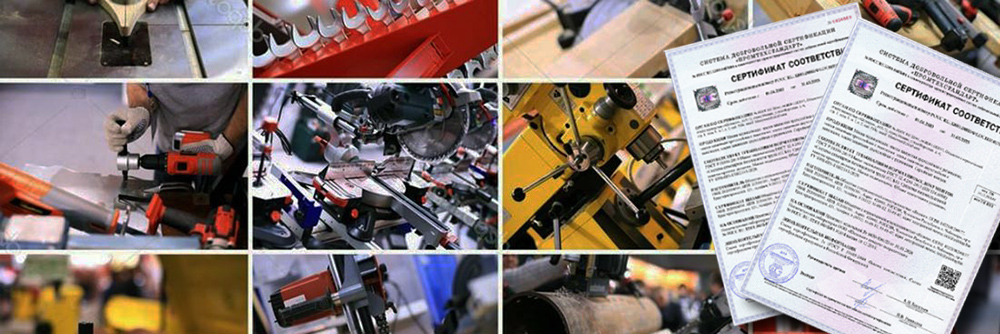
Any product sold in Russia has to be covered by conformity documents issued inside the Eurasian Economic Union system. Customs ask for them at clearance, distributors ask for them before signing, and marketplaces refuse goods without them. A shipment that arrives without the right document stays at the border while the paperwork is arranged, and demurrage runs the whole time. The same document, however, opens considerably more than the Russian market.
Manufacturers exporting to Russia for the first time are usually caught out by the same thing: certificates issued elsewhere do not transfer. CE marking, UL listing, CCC and a factory ISO 9001 are useful supporting evidence, but none of them replaces an EAC document. The product has to be assessed against the technical regulations of the Customs Union, tested by a laboratory accredited in the Russian national system, and the document registered in the state register before the goods move.
Sertifikat RB handles that chain for foreign manufacturers: identifying the applicable regulation, testing in our own accredited laboratory, technical documentation in Russian, and registration of the certificate or declaration. We can also act as your Authorized Representative in the EAEU, so you can start before you have a buyer, and the document stays in your name rather than your importer's.
- One document, five countries
- Why your products need conformity documents
- Who can be the applicant: the first obstacle for a foreign manufacturer
- Do you need a certificate or a declaration?
- What we do for foreign manufacturers
- How the process works
- What you need to send us
- Timeline and validity
- Verifying a document before you pay
- From our practice
- FAQ
- Can we apply for certification ourselves, as a foreign manufacturer?
- Do we have to send samples to Russia, and who clears them?
- We already have CE marking and ISO 9001. Is that enough?
- Our range has twenty models. Do we need twenty certificates?
- Do we need separate documents for Kazakhstan or Belarus?
- What happens if we ship without the documents?
- How much does certification cost?
- We already have a buyer in Russia. Does that change anything?
- + 5 more questions+ 8 more questions
One document, five countries
The EAEU is a customs union of five states: Russia, Kazakhstan, Belarus, Armenia and Kyrgyzstan, together a market of around 184 million people with common technical regulations. A certificate or declaration registered in any member state is valid in all five. There is no separate Kazakh certificate, no second procedure for Belarus, and no repeat testing for a distributor in Yerevan or Bishkek.
For an exporter that changes the arithmetic of the whole exercise. You pay for one assessment and get five markets, and you are free to change the route your goods travel: a consignment cleared in Kazakhstan moves on to Russia under the same document. It also means the applicant can be a company registered in any member state, not necessarily a Russian one, which matters when you are choosing how to structure your presence in the region.
One caveat is worth stating plainly, because nobody selling certificates will tell you. Documents issued by certain bodies in some member states are examined far more closely at the Russian border, and a cheap certificate obtained through a questionable route can cost you a stopped shipment. A document issued through a Russian accredited body and backed by genuine test reports is the version that passes without discussion anywhere in the union. That is the version we issue.
Why your products need conformity documents
Conformity assessment is mandatory. The rules are grouped by product type — electrical safety, electromagnetic compatibility, machinery, food, furniture, textiles, protective equipment — and each group states what has to be confirmed before the goods may be sold in Russia. Which set applies is decided by what the product is and by its HS code, not by what the exporter would prefer: look yours up in the regulation finder.
Once the document is registered, the product is marked with the EAC symbol, and that marking is what a customs officer and a buyer look for. Three practical consequences follow for an exporter:

- Customs clearance. Without a valid registered document the consignment is not released for free circulation.
- Commercial access. Retail chains, marketplaces and industrial buyers verify the document in the state register before purchasing.
- Liability. If products reach the market without valid documents, the penalty falls on the party that placed them there, and the goods can be withdrawn from sale at that party's expense.
Who can be the applicant: the first obstacle for a foreign manufacturer
This is where most enquiries from abroad stall, and it is worth understanding before you compare prices. Under EAEU rules the applicant for certification of serial production must be a legal entity registered in a member state. A factory in China, Turkey, India or Germany cannot file the application in its own name. There are two lawful routes, and they lead to different commercial outcomes.
Route one: your Russian importer applies. Straightforward if you already have a buyer, and often the fastest option. The document, however, is issued to that importer. It covers the goods they bring in, it is tied to their contract, and if the relationship ends you start again with the next partner.
Route two: we act as your Authorized Representative. You sign an agreement appointing us as the manufacturer's authorized person in the EAEU, and we file as the applicant on your behalf. The certificate names you as the manufacturer, you are not tied to a single buyer, and you can supply several distributors under one document. It also lets you obtain the paperwork first and look for importers second. The obligations are real and we take them on knowingly: the authorized representative answers to the Russian authorities for the conformity of the product and keeps the technical file available for inspection. How the scheme works in detail.
- Documents for the Russian market from $50 — full cycle: testing, documents, registration, and we can act as your applicant in the EAEU
- One document valid in all five EAEU countries — Russia, Kazakhstan, Belarus, Armenia, Kyrgyzstan
- Our own accredited testing laboratory, accreditation certificate RA.RU.11NK91
- Payment accepted in RUB, USD, EUR, CNY and TRY
Free assessment of your product and a quote within one business day — WhatsApp, WeChat or e-mail.
Do you need a certificate or a declaration?
Both documents are mandatory where the regulation requires them, both are entered in the state register, and both allow EAC marking. A certificate is issued by an accredited body for higher-risk products; a declaration is registered by the applicant on the basis of test reports. You do not choose between them — the applicable regulation decides, and some products need both, as electrical equipment usually does under TR CU 004 and TR CU 020. We determine this at identification, before any money goes into testing. See certificate versus declaration for the full comparison.
What we do for foreign manufacturers
- Authorized Representative in the EAEU — we act as applicant and keep the technical file.
- EAC certificates of conformity under the technical regulations of the Customs Union.
- EAC declarations of conformity, including registration in the state register.
- Accredited testing and test reports in our own laboratory — mechanical, electrical, climatic, chemical and food testing.
- Technical documentation in Russian — technical specifications, product passports, operating manuals, labels and EAC marking artwork.
- State registration for food supplements, cosmetics, chemicals and goods for children, where a certificate alone is not enough.
- Import of samples for testing under Government Decree No. 353 of 07 April 2018.
How the process works
1. Identification. You send the product description and the HS code if you have it. We establish which regulations apply, which form of assessment is required and what has to be tested, then quote the whole package in writing. This stage is free.
2. Contract and applicant. If you have an importer in the union, they can be the applicant. If not, we sign an authorized representative agreement and file in your name as manufacturer.
3. Samples and testing. Samples travel to the laboratory, and they cannot be shipped as ordinary commercial goods — commercial import is exactly what needs the document you do not yet have. There is a legal route around that loop, and we handle the paperwork: see getting samples to the laboratory.
4. Registration. The certificate is issued or the declaration is registered, and the document appears in the register of the Federal Accreditation Service with its own number. From that moment it can be verified by anyone, including your buyer and the customs officer.
5. Marking and accompanying documents. The product receives the EAC mark and Russian-language labelling, and is accompanied by the operating manual and product passport where the regulation requires them.
What you need to send us
To quote accurately we need the product name and purpose, the model range to be covered, the HS code if you know it, a technical specification, photographs of the product and its nameplate, and whether this is serial supply or a single shipment. Existing CE, CCC or ISO certificates and laboratory data are worth sending too, since some of them shorten the work. The full checklist is on the contacts page.
Timeline and validity
A certificate for serial production covers everything you ship for up to five years; a certificate for a single batch covers only that consignment. Timing depends almost entirely on testing, and simple products are usually complete two to three weeks after the samples arrive. Schemes, timelines and validity periods are set out in detail on the certificate page.
Verifying a document before you pay
Every valid certificate and registered declaration exists in the public register of the Federal Accreditation Service at pub.fsa.gov.ru. If the number is not there, the document does not exist, whatever the paper looks like — and the customs officer checks the same register you can. Foreign manufacturers are a favourite target for brokers selling documents never backed by testing, so before paying anyone, including us, ask for the number and look it up. How to read the register entry and which warning signs matter.
- Documents for the Russian market from $50 — we identify the applicable regulation and quote the full package free of charge
- Testing in our own accredited laboratory, no intermediaries in the chain
- Every document we issue is verifiable in the FSA state register
The final amount depends on the regulation and the test programme and is fixed in the contract. Send us your product details and get a quote within one business day — WhatsApp, WeChat or e-mail.
From our practice
A batch of Chinese chairs that folded under the person sitting on them. The documents were in order and the paperwork looked routine, but during testing under TR CU 025 the chairs collapsed under a load of just over 50 kg. The cause was cheap fasteners that did not hold the declared load. The regulation requires stability up to 100 kg, so the batch failed and never reached the market. Full case (in Russian).
Modern umbrellas against a standard written in 1991. The technical file was entirely in Chinese, and the applicable standard, GOST 29093-91, predates every material used in the product. Our specialist built a hybrid test programme that satisfied the old standard while accounting for the technology described in the Chinese documentation. Full case (in Russian).
Importing what cannot be imported. A manufacturer needed a control unit that fell under TR CU 004 and TR CU 020. Certification required test results, testing required the unit, and importing the unit required the certificate. Decree No. 353 broke the circle: the component came in as a sample for testing, the certificates followed, and the client avoided a production stoppage they valued at over a million roubles. Full case (in Russian).
FAQ
Can we apply for certification ourselves, as a foreign manufacturer?
Not directly. The applicant must be a legal entity registered in the EAEU: your importer, your seller, or a person you authorize to act as your representative. We can take that role, which is the usual solution when you have no buyer in the union yet.
Do we have to send samples to Russia, and who clears them?
Most schemes require testing on real samples, so yes. They come in under Decree No. 353 as samples for testing rather than commercial goods, and we prepare that declaration. The quantity is agreed before you ship anything.
We already have CE marking and ISO 9001. Is that enough?
No, they are not recognized as a substitute. They help as supporting evidence, and test reports from a reputable laboratory sometimes reduce the scope of testing, but the EAC document has to be obtained separately.
Our range has twenty models. Do we need twenty certificates?
Usually not. Models of the same design differing in dimensions, colour or capacity are grouped into one document as a product family; where the differences affect safety, the group is split. This is decided at identification and strongly affects the price.
Do we need separate documents for Kazakhstan or Belarus?
No. One EAC certificate or registered declaration covers Russia, Kazakhstan, Belarus, Armenia and Kyrgyzstan. You do not repeat the testing or the registration for each country, and distributors in any of them work from the same document.
What happens if we ship without the documents?
The consignment is not released at customs. If goods do reach the market without valid documents, the party that placed them there faces fines and withdrawal, and the buyer will hold the supplier responsible under the contract.
How much does certification cost?
It depends on the regulation, the form of assessment, the test programme and whether the document covers serial production or a single batch. We assess your product and quote free of charge; the amount is fixed in the contract before work starts.
We already have a buyer in Russia. Does that change anything?
It gives you the shorter route: your buyer can be the applicant, and no representative agreement is needed. The document then belongs to them and covers their imports, so if you plan to supply several distributors, a certificate held in your own name is usually the better investment.
Leave your name and a way to reach you — we will take it from there. We reply within one business day.